 An IFAC Content Series
On October 3, 2023, experts from the International Auditing and Assurance Standards Board (IAASB), the European Commission (EC), the Committee of European Audit Oversight Bodies (CEAOB), assurance service providers, investors and the business community met to discuss the regulatory, policy and standard-setting path toward high-quality sustainability assurance.
The IAASB is currently consulting on its recently proposed sustainability assurance standard—International Standard on Sustainability Assurance (ISSA) 5000. In the European Union (EU), the Corporate Sustainability Reporting Directive (CSRD) mandates that businesses seek assurance on their sustainability disclosures and empowers the EC to adopt sustainability assurance standards. The EU could be the first jurisdiction to embed the IAASB’s proposed new standard into its regulatory framework, as a response to these new EU requirements.
To obtain insights from experts on the main matters covered by the ISSA 5000 consultation, identify users and preparers’ needs and expectations, and identify the areas for potential enhancements, IFAC and Accountancy Europe brought a diverse range of stakeholders together for an in-person, standing-room only conference in Brussels. Called Preparing for High-Quality Sustainability Assurance Engagements, it was attended by around 130 participants.
Watch the Key Moments of Our Event
Welcome and introduction
Olivier Boutellis-Taft, CEO, Accountancy Europe
Keynote speeches
CSRD implications for sustainability assurance
Rogier Wezenbeek, DG FISMA, European Commission
Tom Seidenstein, Chair, IAASB
State of play in sustainability assurance – global benchmarking study
David Madon, Director, Sustainability, Policy & Regulatory Affairs, IFAC
Deep dive: ISSA 5000 key matters
Isabelle Tracq-Sengeissen, Member, IAASB and Task Force sustainability assurance standards, IAASB
Panel Discussion- Assurance standards: are they fit for purpose?
With Isabelle Tracq-Sengeissen, Member, IAASB and the Task Force for sustainability assurance standards, IAASB; Wim Bartels, Chair, Sustainability Policy Group, Accountancy Europe; Jose María Hinojal, Member of the Assurance Expert Group, EFAA for SMEs; Marc Boissonnet, Executive Vice President and Chief Sustainability Officer, Bureau Veritas; Patrick Parent, Chair, CEAOB
Fireside chat: issuers and investors’ expectations of sustainability assurance
With Olivier Boutellis-Taft, CEO, Accountancy Europe; Tanja Castor, Sustainability Strategy, Head of Sustainability Reporting & Controlling Committee,BASF; Ben Corris, Head of Environmental, Social and Governance (ESG) Models, Schroders
Closing remarks
Olivier Boutellis-Taft, CEO, Accountancy Europe
Key Takeaways
The discussions confirmed that if implementation of sustainability assurance standards is to be done correctly, collaboration is needed from all actors involved. It is a journey for all -- standards-setters, preparers, users, assurance service providers and supervisors--, involving early preparation and substantial upskilling to be ready to take-on the challenges, and make the most of opportunities.
What’s in the Making?
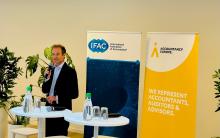
In his opening remarks, Accountancy Europe’s CEO Olivier Boutellis-Taft emphasized that there is a big challenge facing all of us: transforming the economy in a very short timeframe. “Measuring our impacts in a transparent and reliable way is key to this end, therefore sustainability reporting and assurance have a crucial role to play,” he said.
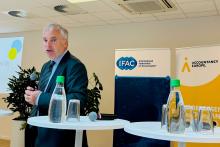
Participants heard from the European Commission (EC), represented by DG FISMA’s Rogier Wezenbeek, on the CSRD’s implications for sustainability assurance. The EC intends to adopt a limited assurance standard via a delegated act by October 1, 2026 and a reasonable assurance standard no later than October 1, in 2028. He made it clear that this is a journey, everyone is in this together, and indicated that there have already been quite a number of bilateral constructive conversations between the EC and the IAASB.
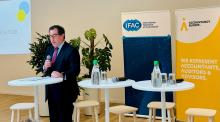
Tom Seidenstein, Chair of the IAASB, then presented the main elements of the ISSA 5000 consultation, noting that it is the outcome of a participative and consultative process and that there is still room for improvement. He stressed: “I encourage you all to take part in our ongoing consultation on sustainability assurance—your input is vital! We are at the advent of a new era of external reporting that includes both financial and sustainability information. The decisions that we make today will have long-term impacts and will be hard to reverse.”
“In my mind, the public interest requires a system that enables global comparability, encourages the development of a cadre of professionals capable of producing and assuring high quality reporting, and is unapologetic in its commitment to quality and rigor,” he added.
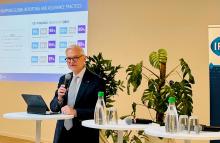
David Madon, Director of Sustainability, Policy & Regulatory Affairs at IFAC shared key findings from IFAC’s latest State of Play benchmarking study on sustainability reporting and assurance. He said: “The goal of ISSA 5000 is to provide a globally accepted overarching standard that would work with any suitable sustainability reporting framework or set of standards. As the global voice of the accountancy profession, IFAC acknowledges the need for ISSA 5000 to be designed for all practitioners, but we urge effective oversight with a level playing field that supports high quality outcomes.”
“The transition from voluntary to mandatory requirements is significant, and important decisions must be made. We hope that our research can help policy makers, regulators, standards setters, and all assurance practitioners who are looking at global trends and current market practices,” he pointed out.
Deep Dive on ISSA 5000 and Views from Key Stakeholders
IAASB member Isabelle Tracq-Sengeissen offered a deep-dive on ISSA 5000 key matters, before moderating a panel discussion that featured:
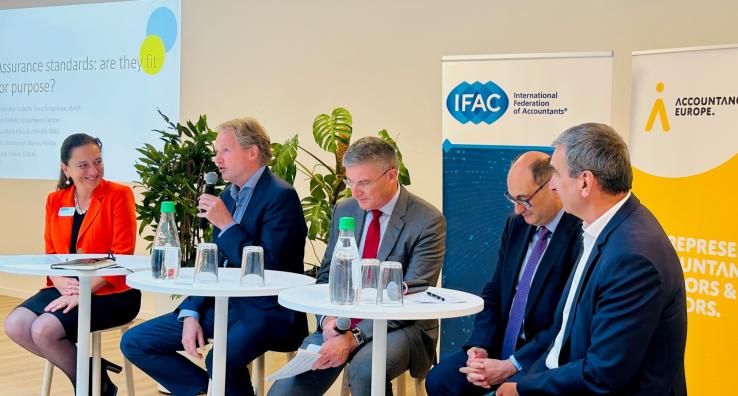
- Wim Bartels, Chair, Sustainability Policy Group, Accountancy Europe, representing the accountancy and auditing profession;
- Jose María Hinojal, member of the Assurance Expert Group, EFAA for SMEs, representing small and medium sized practitioners (SMPs);
- Marc Boissonnet, Executive Vice President and Chief Sustainability Officer, Bureau Veritas, representing independent assurance service providers; and
- Patrick Parent, Chair, CEAOB, representing Audit Oversight Bodies
Introducing the panel, Isabelle Tracq-Sengeissen said: “ISSA 5000 is the key to avoiding an alphabet soup of sustainability assurance standards and to having consistent practice of sustainability assurance globally. It is framework neutral and profession agnostic and can be used as a baseline for all sustainability assurance needs in the world.”
Speakers had a lively exchange of views on whether assurance standards are fit for purpose, focusing on:
- the key aspects of materiality and double-materiality definitions and assessment;
- the differences between limited and reasonable assurance engagements and the communication around them; and
- the risk of greenwashing.
Discussions confirmed that materiality assessment is a key element, and the process should be considered along with its outcome. The transition from limited to reasonable assurance will be a challenging journey, and cost-benefits will have to be considered. In particular, the SME and SMP community will need support and guidance more than others.
Speakers also highlighted that lack of resources and time pressure are the most important challenges. Collaboration and upskilling are thus key, even if accounting professionals already possess relevant skills (such as compiling data, internal controls, risk management, compliance with standards, etc). These will be useful in getting ready for sustainability reporting and assurance.
Finally, speakers pointed out that sustainability reporting and assurance are not only for external users, but also offer benefits to companies if integrated with strategy-setting and decision-making. They stressed the need to ensure that sustainability reports give a balanced picture, free from greenwashing. (For more details, please see the session recording.)
Issuers' and Investors’ Expectations of Sustainability Assurance
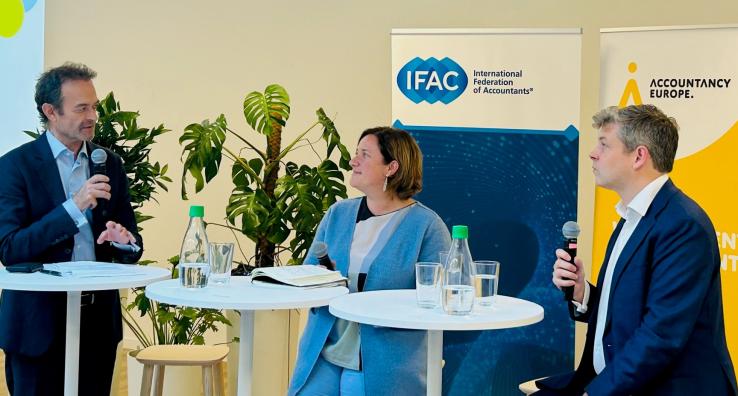
Finally, Olivier Boutellis-Taft led an insightful fireside chat on issuers and investors’ expectations of sustainability assurance between Tanja Castor, Sustainability Strategy, Head of Sustainability Reporting & Controlling Committee at BASF, and Ben Corris, Head of Environmental, Social and Governance (ESG) Models et Schroders.
Tanja Castor shared her views on how companies are preparing for the CSRD assurance requirement and their criteria of selection of assurance providers, and offered recommendations for organisations to enhance their sustainability reporting and assurance practices.
Ben Corris highlighted the challenges identified by investors, and suggested ways of collaboration between the accountancy profession and the investor community to help the latter understand what sustainability assurance engagements entail.
They both reflected on the difference between limited versus reasonable assurance, and shared issuers and investors’ expectations regarding the role of assurance over sustainability information to help tackle greenwashing risks. For more details, please see the session recording.
Olivier Boutellis-Taft concluded the event by thanking the speakers and participants. He noted that EU policymakers have taken a very courageous step and are currently leading the global agenda on sustainability. “The widespread interest into this event has been a very vivid example of growing awareness for this important topic and demonstrates that stakeholders are willing to learn and collectively get ready to change.”
USEFUL RESOURCES
IAASB
European Commission
IFAC
- The State of Play in Sustainability Assurance
- The State of Play Beyond the G20
- A Deep Dive into Sustainability Assurance Engagements
- IFAC’s Vision for High-Quality Sustainability Assurance
Accountancy Europe
- Accountancy Europe Sustainability education Hub
- Sustainability assurance under the CSRD- practical implications
- CSRD: striving for consistent and quality sustainability assurance engagements across the EU


