IFAC, IIA Establish Cooperative Agreement
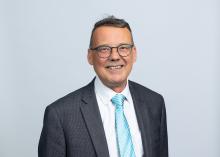
IFAC President Warren Allen and IIA President/CEO Richard Chambers discuss the recently signed Memorandum of Understanding with Compliance Week.
The International Auditing and Assurance Standards Board (IAASB) today released its Post-Implementation Review—a Report that highlights the results of the IAASB’s efforts to learn whether the clarified International Standards on Auditing (ISAs) are being consistently understood and implemented in a way that achieves the IAASB’s goals in clarifying and revising them.
The Report summarizes feedback from those most directly involved in the audit process in jurisdictions that have implemented the clarified ISAs. It describes the IAASB’s process in summarizing the comments and identifies the main themes that have emerged.
“I am pleased to note the many informative and useful comments received in response to the post-implementation review,” said IAASB chairman Prof. Arnold Schilder. “The IAASB issued the clarified ISAs in 2009 as an essential input to audit quality, and the IAASB is committed to their continuous improvement. The Report, therefore, is an important input to the IAASB’s planning process, both in the short term and in the context of its 2015–2019 strategy deliberations.”
Input was received from independent audit inspection bodies, other regulators, and audit committee members, and from the larger accounting firms, smaller practices, and International Federation of Accountants (IFAC) member bodies.
The post-implementation review is the second phase of the IAASB’s efforts to monitor the implementation of the clarified ISAs. The report on the first phase of IAASB’s work, undertaken in 2009 and 2010, was published in November 2010.
About the IAASB
The IAASB develops auditing and assurance standards and guidance for use by all professional accountants under a shared standard-setting process involving the Public Interest Oversight Board, which oversees the activities of the IAASB, and the IAASB Consultative Advisory Group, which provides public interest input into the development of the standards and guidance. The structures and processes that support the operations of the IAASB are facilitated by the International Federation of Accountants (IFAC).
About IFAC
IFAC is the global organization for the accountancy profession dedicated to serving the public interest by strengthening the profession and contributing to the development of strong international economies. It is comprised of 173 members and associates in 129 countries and jurisdictions, representing approximately 2.5 million accountants in public practice, education, government service, industry, and commerce.
# # #
Listen to the podcast below. See the June 2013 meeting page for additional materials, including meeting highlights, agenda papers, and full audio recordings.
This report highlights the findings of the IAASB’s efforts to learn whether the clarified ISAs are being consistently understood and implemented in a way that achieves the IAASB’s goals in clarifying and revising them. The report summarizes the feedback from those most directly involved in the audit process in jurisdictions that have implemented the clarified ISAs. It also describes the IAASB’s process in summarizing the comments and identifies the main themes that have emerged.
The International Federation of Accountants (IFAC) and The Institute of Internal Auditors (The IIA) have signed a Memorandum of Understanding (MoU) to create a formal basis for the advancement of risk management and internal controls toward a common goal of enhanced governance.
Signed today at The IIA’s International Conference, the IFAC-IIA MoU outlines a new plan for enhanced coordination, collaboration, and resource sharing that will draw on the strengths and expertise of the two organizations. Both are engaged in the restoration of public confidence in business reporting and enhancing governance processes in the private and public sectors.
“This Memorandum of Understanding further strengthens the important relationship between The IIA and IFAC. It represents our united commitment to serve the public interest and restore the confidence of the general public in business reporting,” said Richard Chambers, president and chief executive officer of The IIA.
As outlined in the MoU, IFAC and IIA recognize that the following are fundamental to an organization fulfilling its objectives, implementing reliable financial management and reporting, and serving its stakeholders and the public interest:
“IFAC welcomes this opportunity to continue our collaboration with The IIA,” said IFAC President Warren Allen. “Our professions are closely related, we share common goals, and address the same issues. Joining our efforts and voices therefore makes sense.”
Through the development of an Annual Work Plan, the organizations will create structures and processes appropriate to share information and best practices in government, risk management, and internal control as well as in audit methods and the application of international standards.
About IFAC
IFAC is the global organization for the accountancy profession, dedicated to serving the public interest by strengthening the profession and contributing to the development of strong international economies. It is comprised of 173 members and associates in 129 countries and jurisdictions, representing approximately 2.5 million accountants in public practice, education, government service, industry, and commerce.
About The IIA
Established in 1941, The IIA serves more than 180,000 members in 190 countries and is the internal audit profession's global voice, chief advocate, and principal educator. The Institute develops and maintains the International Professional Practices Framework for internal auditing, comprising the International Standards for the Professional Practice of Internal Auditing, and certifies professionals through the globally recognized Certified Internal Auditor. Visit www.theiia.org for more information.
###
This collaboration further strengthens IFAC’s and The IIA’s commitment to restore confidence to the general public in business reporting and enhancing governance processes in the private and public sectors.
Interview translated into English by IFAC and conducted by El País in Spanish. For original in Spanish, see: Entrevista con Jörgen Holmquist Presidente del Comité Internacional de Ética del Sector de Auditoría (IESBA)
English translation:
Jörgen Holmquist is the chair of the International Ethics Standards Board for Accountants (IESBA).
Question. Why is IESBA working on a revision of the Code of Ethics for Professional Accountants (the Code)?
Answer. The issue is not to modify the content of the Code but its structure. It is difficult to read and the purpose of the revision is to make it more accessible, particularly for the small and medium size audit firms. We are in consultation within the sector and regulators to see how we can improve the structure of the Code.
Q. Would you say auditors bear some responsibility for the financial crisis?
A. There are many parties responsible for this crisis: bankers, politicians, supervisors … Auditors also bear their share of responsibility. It is not as much a problem of independence or of ethics in front of their clients but rather of failures in the way audits were performed since the work of auditors should have resulted in better information to judge what was going on.
Q. Have lessons been drawn from the recent mistakes?
A. Auditors are reflecting on how to improve their work. It is still an ongoing process. From point of view of Ethics there are several things to be considered: how to strengthen independence, how to improve rotation rules, how to proceed when irregularities are identified…
Q. Are auditors contributing to restore confidence in the markets?
A. Confidence in auditors is important and necessary since one of the services they render is to make it possible for investors to trust corporate information. This service has not changed and I believe it is generally well accomplished, although in the cases where the role of the auditor is at question it is obviously necessary to find a solution.
Q. Revenues from services other than audit are increasing in many cases, does this put the auditor’s independence at risk?
A. We cannot generalise. It is clearly stated in the Code of Ethics that there are certain services that the auditor cannot provide. We are now reviewing these rules to see if they need to be strengthened.
Q. Would you be in favour of setting a limit to such services?
A. The real challenge is to find a balance between the different sources of income. Revenues from other services should not subsidise audit, rather audit fees should fully cover the cost of audit services. In cases where revenues from other services are very significant there could be a problem, but it is very difficult to say where to set the limit, since the appropriate limit differs depending on the circumstances. Transparency is very important in these cases: let the market know what pays what and then the Audit Committee of the company should decide on such matters.
Q. The European Union has been trying to increase competition in the market for years, what do you think about this?
A. The rotation of the audit firms is not the panacea, it has advantages but also disadvantages. To improve the way the sector works there are more important issues at stake. Moreover, we have to take into account that in the course of the auditor’s engagement with the company audit partners and directors of the company usually change.
Q. Do you believe there is real competition in this industry? How do you explain the increase of revenues of the big companies year after year despite the crisis?
A. It doesn’t surprise me that revenues are stable or increasing because the crisis brings forward demand for more services. If we take a close look to the sector we see a fair amount of competition between small and medium firms. It is maybe less so in the case of the big four where there is more concentration There should be a few more players at that level, but how can this be achieved? There is no easy answer to this question.
Q. There is the feeling that auditors profited from the problem and now they profit from the solution…
A. I see what you are saying but for me the issue is whether the auditors conduct themselves in an ethical manner and whether they produce quality work. Auditors’ workload has significantly increased because of the crisis which has led to more hours worked. The trend points to a reduction of hourly fees. I don’t believe that auditors as a general rule are profiting from the crisis.
Q. The big four are all Anglo-Saxon; do you think it would be interesting to promote a big European firm?
A. It is difficult to create a brand new company that can compete with the big four because what the clients require is a worldwide network that can provide services in any country where they have a presence.
Entrevista con Jörgen Holmquist, presidente del Comité Internacional de Ética del Sector de Auditoría (IESBA), en El País
IFAC President Warren Allen presented “Driving Sustainable Organizational Success” at the Institute of Chartered Accountants of the Caribbean’s (ICAC) 31st Annual Caribbean Conference held June 28 in Barbados.