• Final Pronouncement: International Ethics Standards for Sustainability Assurance (including International Independence Standards) and Other Revisions to the Code Relating to Sustainability Assurance and Reporting

    The International Ethics Standards for Sustainability Assurance (including International Independence Standards) and related revisions to the Code, address critical risks to the integrity, quality and effectiveness of sustainability reporting and assurance such as bias, conflicts of interest, pressure to act unethically, fraud including greenwashing, non-compliance with laws and regulations, and threats to the independence of the assurance practitioners.

    Update, August 25, 2025: Minor editorial change to paragraph 5380.19 A1

    IESBA
    English
  • Global Ethics Sustainability Standards: IESBA welcomes certification by PIOB and IOSCO Statement of Support

    English

    The International Ethics Standards Board for Accountants (IESBA) welcomes the Public Interest Oversight Board’s (PIOB) important decision to certify its Global Ethics Sustainability Standards and the International Organization of Securities Commissions (IOSCO) Statement of Support calling on its members to apply or be informed by the new framework. 

    The Global Ethics Sustainability Standards include the International Ethics Standards for Sustainability Assurance (including International Independence Standards) (IESSA) and the revisions to the International Code of Ethics for Professional Accountants (including International Independence Standards) (the Code) related to sustainability reporting and to the use of the work of an external expert.

    Reacting to the PIOB’s Certification and IOSCO’s Statement of Support, Gabriela Figueiredo Dias, Chair of IESBA said:

    The certification of IESBA’s new ethics standards framework for Sustainability and Experts, along with IOSCO's call for its members to adopt or be informed by the framework, marks a significant step to cement ethics as the foundation of trust and accountability in sustainability reporting and assurance. The global sustainability standards infrastructure is now complete, with the ethics piece providing foundational instruments to underpin transparent, relevant and trustworthy sustainability information. Looking forward to the joint launch with IAASB of the new ethics and assurance standards. Join us on 27 January.”

    These landmark new standards provide a robust ethical framework for reporting and assuring sustainability-related information that promotes high quality, reliable information for decision-making by investors, lenders, customers, suppliers, government, regulators and other stakeholders.  

    The IESSA and related revisions to the Code, including regarding using the work of an external expert, address critical risks to the integrity, quality and effectiveness of sustainability reporting and assurance such as bias, conflicts of interest, pressure to act unethically, fraud including greenwashing, non-compliance with laws and regulations, and threats to the independence of the assurance practitioners.

    The final standards can be found on the IESBA’s website https://www.ethicsboard.org/standards-pronouncements.

    The official launch of the new standards will take place on January 27, 2025, jointly with the International Auditing and Assurance Standards Board’s (IAASB) International Standard on Sustainability Assurance 5000 (ISSA 5000). After robust and close coordination, the IESBA and IAASB developed comprehensive, interoperable global standards for assurance, ethics, and independence for sustainability assurance engagements.           

    A Major Step Forward for Integrity and Public Trust in Sustainability Information

  • Final Pronouncement: Using the Work of an External Expert

    The Using the Work of an External Expert Final Pronouncement provides an ethical framework to guide professional accountants or sustainability assurance practitioners, as applicable, in evaluating whether an external expert has the necessary competence, capabilities and objectivity in order to use that expert’s work for the intended purposes. The standard also include provisions to aid in applying the Code’s conceptual framework when using the work of an external expert.

    IESBA
    English
  • IESBA Welcomes New and Re-Appointed Members, Appoints New Vice Chair

    New York, NY English

    On January 1, 2025, the International Ethics Standards Board for Accountants (IESBA) welcomed two new members following their appointments by the Public Interest Oversight Board (PIOB) in November 2024.

    • Nancy Miller (USA), Managing Director in Risk Management - Audit and Independence, KPMG - “The opportunity to collaborate with a diverse group of accomplished professionals, to continue IESBA’s mission, is a unique and important role that I am honored to hold. I hope to bring my background, working in both very small and very large accounting firms, to support strong international ethics standards that fulfill obligations to comply with the underlying principles while drafting standards that are clear, operationally sound and can be consistently applied.” 
    • Obichukwu Nwazota (Nigeria), Managing Consultant, UGN Consulting Services Ltd - “Accountants are profoundly essential to a sustainable economic future, providing financial and non-financial insights that drive decision-making across diverse sectors and levels, with far-reaching local and global impacts. To maintain the public trust and proper functioning of economies, high-quality ethical standards for accountants are critical. It is a great privilege to join the IESBA and contribute to the enhancement of its high-quality ethical standards and strengthening their implementation globally in the public interest.”

    The IESBA also welcomed the appointment of Channa Wijesinghe FCPA (Australia) as the Board’s Vice Chair. Channa, the CEO of the Australian Accounting Professional & Ethical Standards Board (APESB), joined the Board in 2022. In addition to Channa, Mark Babington (United Kingdom), Christelle Martin (France), and Rich Huesken (USA) were all reappointed to the Board.

    "It is my pleasure to welcome Nancy and Obichukwu to the IESBA. I also want to thank Channa for accepting the important role of Vice-Chair and congratulate him on his appointment, as well as Mark, Christelle, and Rich on their reappointments," said IESBA Chair Gabriela Figueiredo Dias, who added: "As we take on critical issues of global importance—such as ethics in sustainability reporting and assurance, accounting firm culture and governance, and expanding the scope of the Code—having a mix of new perspectives and experienced voices is essential. Nancy and Obichukwu bring fresh insights and expertise, while Channa’s leadership as Vice Chair, along with the deep knowledge of our returning members, provides continuity and strength to the Board. Together, this dynamic group will help us achieve our ambitious goals and continue to lead with ethics to make a meaningful impact in the public interest. I am looking forward to working with them over the next term.”

    The PIOB’s Invitation for Applications for IESBA members for terms of service beginning in January 2026 will be open in February. The IESBA encourages qualified candidates to apply.

  • IESBA Firm Culture and Governance Working Group Final Report

    The FCGWG Final Report highlights the critical role of ethical culture and governance in addressing issues of unethical behavior within accounting firms. Through extensive outreach and research conducted in 2024, the FCGWG identified key drivers of an ethical firm culture, including ethical leadership, transparent accountability mechanisms, and governance frameworks that embed ethical values across all service lines.

    IESBA
    English
  • IESBA Launches Standard-Setting Project on Accounting Firm Culture and Governance

    New York, NY English

    The International Ethics Standards Board for Accountants (IESBA) launched a standard-setting project on accounting firm culture and governance, actioning the recommendations of the Working Group on Firm Culture and Governance in its fact-finding report, which was released today.

    Key findings of the report include:

    • The role of ethical leadership and robust governance within accounting firms as key drivers in creating a culture that promotes ethical behavior.
    • The importance of transparent and ethical leadership, firm-wide accountability mechanisms and the provision of independent input.
    • The need for alignment of performance incentives with ethical behavior, continuous ethics education, and a culture of open discussion and challenge.  

    Taking into consideration the Working Group’s conclusions and recommendations, the standard-setting project aims to develop a principles-based culture and governance framework for accounting firms that promotes, supports and reinforces a high standard of ethical behavior across all their professional services.

    As part of this strategic initiative, the IESBA will also develop non-authoritative materials to raise awareness about the importance of ethical behavior in accounting firms and support firms with guidance on embedding ethics into their strategies and operations. These will also help involve other stakeholders who might contribute to developing an ecosystem for highly ethical accounting firms.

    The IESBA will conduct a series of in-person and virtual global roundtables in March and April 2025 to gather views from a broad range of stakeholders. The in-person roundtables will be held in New York City, USA; Melbourne, Australia; Brussels, Belgium; and Kuala Lumpur, Malaysia. Further details will be announced in due course.

    Gabriela Figueiredo Dias, Chair of the IESBA, said, “Ethics is foundational to the work of all accounting firms and all the professionals therein. It is their gateway to public trust in their professional services. I commend the Working Group on tabling a comprehensive report, identifying the key areas of focus we will be probing carefully and systematically, in collaboration with stakeholders, as we seek to develop a global framework for culture and governance for firms. It is our strong conviction that this framework will enable firms to be highly ethical firms consistently, strengthening their resilience against risks of unethical behavior, maintaining a good reputation, and ensuring their long-term sustainability to serve clients, investors, other stakeholders, and the public interest.”

    Established in March 2024, the Working Group’s charge included, among other matters, gathering an understanding of culture and governance and their impact on compliance with ethical requirements in accounting firms and, where applicable, their networks and developing recommendations for the IESBA.

    The development of the report was informed by extensive outreach to stakeholders, including regulators and oversight bodies, investors and the corporate governance community, accounting firms, professional accountancy organizations, national standard setters, and the Stakeholder Advisory Council, as well as a review of academic literature.

    The topic of accounting firm culture and governance is a strategic priority for the IESBA following a spate of high-profile cases of unethical behavior in accounting firms in several jurisdictions in recent years. These cases have led to adverse consequences for individual professional accountants and their firms in multiple jurisdictions. 

    About IESBA

    The International Ethics Standards Board for Accountants (IESBA) is an independent global standard-setting board. The IESBA’s mission is to serve the public interest by setting high-quality, international ethics (including independence) standards as a cornerstone to ethical behavior in business and organizations, and to public trust in financial and non-financial information that is fundamental to the proper functioning and sustainability of organizations, financial markets and economies worldwide.

    Along with the International Auditing and Assurance Standards Board, the IESBA is part of the International Foundation for Ethics and Audit. The Public Interest Oversight Board (PIOB) oversees IESBA and IAASB activities and the public interest responsiveness of the standards.

    The decision aligns with the recommendations outlined in the Firm Culture and Governance Working Group’s fact-finding report, released today
  • Rui Peres Jorge

    Job Title

    Director – Strategy and Communications, IESBA

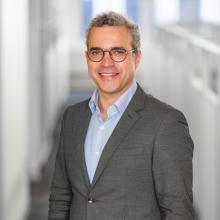
    As Director, Strategy and Communications, Rui Peres Jorge is responsible for shaping and advancing the IESBA’s strategic positioning, innovation agenda, and communications function. The role supports and advises the Chair, Senior Director, and Board on strategic priorities, risk and opportunity analysis, innovation and external positioning, with a strong focus on enhancing the relevance, adoption, and impact of IESBA’s ethics and independence standards globally.

    Mr. Peres Jorge joined IESBA in January 2025. Previously he served as Economics Advisor and Head of Communications at the Ministry of Finance in Portugal. Before he served at the Portuguese Securities Market Commission as Advisor to the Board of Directors and Head of Strategic Analysis and Communications.

    He began his career as a journalist, specializing in macroeconomics and financial economics. He reported on the global financial crisis and international institutions like the IMF, ECB, and European Commission and is a published author on the topic. His awards and professional training opportunities included engagements in Washington, D.C., and New York in collaboration with the Committee of Concerned Journalists, the Columbia Journalism School, and the Financial Times.

    Mr. Peres Jorge holds a master’s degree in Monetary and Financial Economics from the University of Lisbon, and a postgraduate qualification in Public Accounting. He holds certifications in High Impact Leadership from INSEAD and in Strategic Communications in Society - Power, Ethics and Practice from the London School of Economics and Political Science (LSE).

    Image
    Rui Peres Jorge
  • Obichukwu Nwazota

    Country

    Nigeria

    Term Start

    Obichukwu Nwazota joined as a Member of the IESBA in January 2025. Ms. Nwazota is the Managing Director of UGN Consulting Services Ltd, an accounting, tax, and management consulting firm in Abuja, Nigeria. Previously she was an Audit Senior in Deloitte Nigeria, where she led various audit and audit related service engagements for both private and public sector clients.

    Ms. Nwazota has over 15 years' experience in auditing, financial reporting, tax and management consulting. She is also the Director, Organizational Management / Development in Poliwonk Consultants Limited, Abuja, Nigeria, and the President of the Uche Godwin Nzoko Foundation (UGN Foundation), a not-for-profit organisation that promotes ethics and values, good governance, and ESG / Sustainability for nation building. 

    Ms. Nwazota is a fellow of the Association of Chartered Certified Accountants (ACCA), a member of the Institute of Chartered Accountants of Nigeria (ICAN), a member of the Chartered Institute of Taxation of Nigeria, and a fellow of the Institute of Management  Consultants, Nigeria. She has a bachelor's degree in accountancy from the University of Nigeria.

    Image
    Obichukwu Nwazota
  • Nancy Miller

    Country

    United States of America

    Term Start

    Nancy Miller joined as a Member of the IESBA in January 2025. Ms. Miller is a Managing Director in Risk Management - Audit and Independence, at KPMG, US and was previously the managing partner at Miller Foley Group.

    Ms. Miller serves on the AICPA Professional Ethics Executive Committee (PEEC). PEEC sets ethics and independence standards for members of the AICPA. She previously served as the chair of the technical standards sub-committee, to enforce violations of the Code of Conduct related to technical standards as delegated by PEEC.

    Image
    Nancy Miller
  • Technology Working Group

    The IESBA is committed to continuously monitor the rapidly evolving landscape of technological transformations and the related impacts on the activities and services performed by professional accountants from an ethical perspective. The objectives as set out in the Technology Working Group terms of reference are to: