  • IESBA Launches Global Surveys to Inform its Role of CFOs Initiative

    New York, NY English
    • The role of CFOs is evolving rapidly, as organizations face growing uncertainty, accelerating technological change, sustainability demands, and other structural shifts.
    • IESBA is inviting CFOs and other stakeholders who work with or oversee CFO functions to take part in dedicated global surveys examining the evolving role of CFOs and the ethical challenges that accompany this evolution, up until April 24.
    • Insights from the surveys, together with IESBA’s global outreach activities, will inform IESBA’s decision on whether enhancements to the IESBA Code, guidance or other support for CFOs is warranted, with a decision expected by September.

    The IESBA today launched two extended global stakeholder surveys to inform its Role of CFOs initiative, focusing on the evolving role of CFOs and equivalent senior finance leaders, the ethical challenges resulting from this evolution, and whether the IESBA Code remains clear, fit-for-purpose, and practical in the public interest.

    Building on its CFO Pulse Survey conducted over the Summer of 2025, the two surveys are directed at CFOs or equivalent senior finance leaders, and at stakeholders who interact with or oversee CFOs.

    The surveys explore four areas of interest:

    • How the role of CFOs and other equivalent senior finance leaders has evolved and the ethical challenges they face;
    • How effectively the IESBA Code supports ethical responsibilities and expectations;
    • The nature and extent of involvement of individuals in CFO roles who are not members of a professional  accountancy organization (PAO); and
    • Potential actions the IESBA could take, including enhancements to the IESBA Code, guidance or other resources, or other initiatives to support ethical leadership in finance functions.

     “The role of CFOs and other senior finance leaders continues to evolve beyond traditional financial stewardship. Given the importance and centrality of this role within companies and organizations, these surveys will enable the IESBA to better understand the realities of the role today, the ethical challenges individuals in this role face, and how the IESBA can continue to support their ethical leadership,” said Gabriela Figueiredo Dias, Chair of the IESBA.

    CFOs or equivalent senior finance leaders (regardless of title or membership of any PAO), stakeholders who interact with or oversee CFOs (including PAOs), other professional organizations, regulators and oversight bodies, investors and stewardship groups, accounting firms, jurisdictional standard setters, those charged with governance, governance specialists, and academics are invited to respond to the surveys up until April 24.  

    The surveys are anonymous and take approximately 10 to 15 minutes each to complete. They can be accessed here.

    Outreach plans provide additional support to decision

    The Role of CFOs initiative will also be informed by roundtables and focus group meetings in key markets during the first half of 2026, including Europe, North America, Africa, Asia, and Latin America.

    The initiative aims to support CFOs and equivalent senior finance leaders in upholding high ethical standards that safeguard the integrity and reliability of financial and non-financial information on which investors, markets, regulators, and the public depend, and public trust in their organizations.

    Informed by the survey results and stakeholder input, the project team will present preliminary findings at the June 2026 IESBA meeting, followed by a final report and recommendations at the September 2026 IESBA meeting.

    To learn more about IESBA's role of CFOs initiative and follow updates, visit the Role of CFOs Focus Page.

    About IESBA

    The International Ethics Standards Board for Accountants (IESBA) is an independent global standard-setting board. The IESBA’s mission is to serve the public interest by setting high-quality, international ethics (including independence) standards as a cornerstone to ethical behavior in business and organizations, and to public trust in financial and non-financial information that is fundamental to the proper functioning and sustainability of organizations, financial markets and economies worldwide.

    Along with the International Auditing and Assurance Standards Board (IAASB), the IESBA is part of the International Foundation for Ethics and Audit (IFEA). The Public Interest Oversight Board (PIOB) oversees IESBA and IAASB activities and the public interest responsiveness of the standards.

  • Snapshot: IESBA’s “The Role of CFOs” Initiative

    English

    IESBA’s Snapshots provide short, non-technical overviews of IESBA projects and initiatives. They explain purpose, direction, and current focus in clear and accessible terms, alongside more detailed technical materials.

    This Snapshot focuses on IESBA’s Role of CFO Initiative.

    Q1. Why is IESBA examining the role of CFOs now?

    In recent years, the role of Chief Financial Officers (CFOs) and other senior finance leaders has expanded significantly beyond traditional financial stewardship. CFOs are increasingly involved in areas such as sustainability reporting, data governance, technology oversight, and enterprise risk management.

    These developments place CFOs at the center of decisions that affect the integrity and reliability of both financial and non-financial information relied upon by investors and markets, regulators, and the public. Understanding how this evolving role may shape ethical decision-making is a necessary first step before considering whether IESBA's existing ethical frameworks continue to provide appropriate support in these conditions.

    Q2. What are the objectives of the “The Role of CFOs” initiative?

    The objectives of the initiative are to better understand:

    • How the CFO role is evolving across industries, sectors, and jurisdictions
    • Whether this evolution has resulted in new or additional ethical challenges
    • Whether the ethical framework in the IESBA Code remains clear, relevant, and fit for purpose in supporting ethical decision-making in these environments

    The initiative is exploratory and evidence-based. Its purpose is to inform the Board’s understanding before any consideration of potential future actions.

    Q3. Does this initiative assume that CFOs are facing ethical failures?

    No. The initiative does not start from an assumption of ethical failure or misconduct.

    Rather, it recognizes that roles, expectations, and decision environments have changed, and it seeks to understand whether existing ethical principles and guidance continue to operate effectively under these evolving conditions. The focus is on learning from experience.

    Q4. What has IESBA learned so far?

    Initial insights from a CFO pulse survey suggest significant diversity in CFOs’ professional backgrounds, ethical reference points, and sources of guidance. Many CFOs are not members of a professional accounting body and often rely primarily on employer-based codes of conduct rather than professional ethical standards.

    These early findings highlight the importance of deeper and broader engagement to better understand which ethical frameworks are applied in practice and how, and where CFOs may experience ethical pressures or uncertainty in real-world decision-making.

    Q5. What is IESBA focusing on in the current phase of work?

    The initiative is currently in an information-gathering phase, drawing on:

    • Research and analysis
    • Extended surveys
    • Stakeholder engagement, namely through global roundtables and focus group meetings

    This phase is designed to explore where ethical challenges and pressures arise, how they are experienced, and how CFOs navigate them across different organizational, regulatory, and jurisdictional contexts. It is intentionally focused on evidence-gathering rather than conclusions.

    Q6. Does this work signal upcoming changes to the IESBA Code or issuance of new guidance?

    No decisions have been taken at this stage. The initiative seeks to assess whether existing provisions in the IESBA Code remain fit for purpose considering the evolving CFO role and associated ethical challenges. Any consideration of standard-setting, the development of guidance, or other initiatives will take place only after the information-gathering phase has concluded and following full deliberation by the Board.

    Q7. Who is in the scope of this initiative?

    The initiative focuses on CFOs and other equivalent senior finance leaders across the private, not-for-profit, and public sectors, regardless of the title of their role or professional background.

    This includes both professional accountants and individuals who are not members of a professional accounting body. Capturing this diversity is central to understanding how ethical decision-making operates in practice and where common themes may - or may not - emerge.

    Q8. Why is IESBA the appropriate body to undertake this work?

    IESBA sets high-quality international ethics standards, including independence standards, for the preparation, reporting and assurance of financial and non-financial information. These standards are a cornerstone of ethical behavior in business and organizations and help support public trust in the information that underpins the functioning and sustainability of organizations, financial markets, and economies worldwide.

    As CFO roles evolve and ethical decision-making increasingly influences information relied upon by investors and markets, regulators, and society, it is appropriate for the IESBA to examine whether its existing ethical framework remains clear, relevant, and practical in the public interest.


    About IESBA

    The International Ethics Standards Board for Accountants (IESBA) is an independent global standard-setting board. The IESBA’s mission is to serve the public interest by setting high-quality, international ethics (including independence) standards as a cornerstone to ethical behavior in business and organizations, and to public trust in financial and non-financial information that is fundamental to the proper functioning and sustainability of organizations, financial markets and economies worldwide.

    Along with the International Auditing and Assurance Standards Board (IAASB), the IESBA is part of the International Foundation for Ethics and Audit (IFEA). The Public Interest Oversight Board (PIOB) oversees IESBA and IAASB activities and the public interest responsiveness of the standards.

  • Collective Investment Vehicles and Pension Funds Project Team Report

    This report presents the findings of an IESBA Project Team examining auditor independence considerations in the audits of collective investment vehicles and pension funds. It draws on extensive research and global stakeholder consultation to assess whether the independence provisions in the International Code of Ethics for Professional Accountants remain fit for purpose in these investment structures.

    IESBA
    English
  • Op-Ed - Why audit and accounting failures are often cultural and what we can do about it

    Gabriela Figueiredo Dias
    IESBA Chair
    English

    The following was originally published on January 23rd 2026 by the Edge Singapore


    When major audit or accounting failures make headlines, the first instinct is to look for the individual at fault. Who made the wrong call? Who crossed the line? Who failed to speak up?

    Individual accountability matters. But experience tells us it rarely explains the full story.

    Across Asia and globally, a familiar pattern emerges when failures are examined closely. Problems rarely begin with blatant misconduct. They start with small compromises, rationalized decisions, or “grey area” judgments that are not recognized as ethical issues at the time. Over time, those choices become normalized, silence takes hold, and ethical risk accumulates until it surfaces in ways that damage trust.

    This pattern is visible across many of the scandals analyzed by regulators and oversight bodies. Early warning signs are often present, but they are minimized, reframed as technical matters, or absorbed into everyday practice. What stands out is not the absence of rules, but how organizational environments allow concerns to be deferred, diluted, or ignored.

    In fast-growing, highly competitive environments like Singapore and the wider Asia-Pacific region, these dynamics are well understood. Accounting firms operate under intense commercial pressure, tight timelines, complex regulation, and rapidly evolving expectations around sustainability, technology, and governance. In such settings, the real question is rarely whether strong and needed standards exist. It is whether organizational culture enables people to apply them with integrity, especially when incentives are strong or pressure is high.

    Consider some well-known types of failures.

    Exam-cheating scandals have shown how unethical behavior can become embedded when performance targets dominate and organizations signal, explicitly or implicitly, that outcomes matter more than how they are achieved. No single act may seem decisive. But taken together, such cases point to cultures where shortcuts are tolerated, challenge is muted, and accountability becomes diffuse.

    Conflicts of interest offer another illustration. Professionals may find themselves providing advice to one or more clients based on confidential information obtained from another client, or accepting aggressive interpretations that technically comply with standards but strain their professional judgment when an audit client is also a lucrative consulting client. When these situations are framed as technical or commercial rather than ethical, judgment erodes. What begins as an exception quietly becomes routine.

    Similar risks are emerging in the still-developing sustainability reporting and assurance ecosystem. Greenwashing is rarely about outright fabrication. More often, it stems from selective disclosures, over-confidence in immature models, or pressure to present a positive narrative. Without cultures that encourage challenge, skepticism, and pause, ethical blind spots multiply.

    What unites these examples is not a lack of professional standards or codes. It is the environment in which decisions are made.

    Ethical failures are often cultural, not individual.

    Culture shapes what people notice, what they question, and what they feel able to challenge. It determines whether concerns are escalated early or buried, whether ethical discomfort is taken seriously or dismissed as an inconvenience, and whether leadership rewards sound judgment or merely results. Ethics does not live only in personal character. It lives in systems.

    This insight is not new. Research and regulatory experience consistently show that ethical behavior is strongly influenced by organizational culture. Yet globally, there is still no common baseline to help accounting firms assess and strengthen ethical culture and governance in a consistent and practical way.

    This gap matters for accounting firms, for markets, and for public trust.

    That is why the International Ethics Standards Board for Accountants (IESBA) has launched its Viewpoints on Firm Culture and Governance, alongside a global dialogue initiative to test and refine them with stakeholders. The aim is not to prescribe a one-size-fits-all solution or to replace individual accountability, but to complement it with a global ethical culture baseline that is fit for purpose.

    Any framework that may emerge from this work will be principles-based and scalable. Accounting firms of different sizes and structures face different realities, but all need clarity on how culture and governance support ethical behavior across the full range of professional services. The focus is on outcomes: creating environments where people are encouraged and expected to act in the public interest, even when doing so is uncomfortable.

    Singapore’s role in this conversation is particularly important. As a leading financial center with strong regulatory foundations, it sits at the forefront of emerging ethical risks. But it is also at the forefront of the search for solutions. That conclusion comes directly from two days of intensive discussions IESBA recently held in Singapore with regulators, professional bodies, firms, and CFOs. What stood out was not complacency, but a strong appetite to engage, to challenge existing approaches, and to help shape practical, forward-looking responses.

    Trust is a strategic asset. Once lost, it is costly to rebuild. Strengthening firm-wide culture and governance is not about avoiding the next negative headline. It is about ensuring that the countless decisions made every day, often out of the spotlight, are guided by ethical judgment, responsibility, and the public interest.

    That is a challenge worth taking seriously. And one we can do something about.

    The following was originally published on January 23rd 2026 by the Edge Singapore

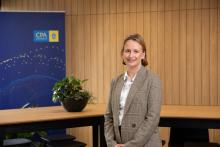
  • Belinda Zohrab

    Job Title

    Technical Advisor to Channa Wijesinghe

    Belinda Zohrab is the Standards and Regulation Lead in Policy and Advocacy at CPA Australia where she engages with government, regulators, and standard setters to advocate for CPA Australia members, the accounting industry and the public interest on matters relevant to the accounting profession. Ms. Zohrab provides thought leadership activities on matters concerning professional and ethical standards and the regulation of the accounting profession to support policy makers formulate policy.  Ms Zohrab is the Technical Advisor to Channa Wijesinghe, the CEO of the Accounting Professional & Ethical Standards Board (APESB) and Vice Chair of IESBA.

    In her prior work, Ms. Zohrab has worked as a tax specialist in both accounting and legal firms and taught tax and business law at under-graduate and post-graduate level, including at CPA Australia. She has a Master of Laws degree from the University of Melbourne, Australia.

    Image
    Belinda Zohrab
  • IESBA and IAASB Launch Joint Stakeholder Survey to Shape 2028-2031 Strategies

    New York, New York English
    • Launches the strategic planning process for both boards’ next strategies and work plans
    • Reflects deepened IESBA-IAASB coordination through a single, streamlined consultation that reduces stakeholder burden
    • Announces a coordinated 2026 consultation calendar to support effective and meaningful engagement

    The International Ethics Standards Board for Accountants (IESBA) and the International Auditing and Assurance Standards Board (IAASB) today launched a joint global stakeholder survey, marking the beginning of work toward their respective Strategies and Work Plans (SWPs) for 2028–2031—a period of expected significant change in the global audit, assurance and ethics landscape.

    The joint survey represents the first step in the boards’ strategic planning process and will help inform the development of their respective Consultation Papers, targeted for approval at the end of 2026. By launching a single, coordinated survey, IESBA and IAASB are reinforcing their close collaboration while streamlining engagement and reducing duplication for stakeholders, who are invited to contribute to one  rather than parallel surveys.

    The survey seeks input from a broad and diverse range of stakeholders, reflecting the global reach and public interest role of both boards. Responses will help the boards better understand how the environment for audit, assurance, ethics, and independence is evolving, and how the public interest can best be served in a rapidly changing global reporting ecosystem.

    “As the global audit, assurance, and ethics landscape continues to evolve, it is essential that our strategies are informed by diverse stakeholder perspectives,” said Gabriela Figueiredo Dias and Tom Seidenstein, Chairs of the IESBA and IAASB, respectively. “This joint survey reflects our shared commitment to listening carefully, coordinating closely, and ensuring our work continues to serve the public interest in a rapidly changing environment.”

    The survey focuses on three principal areas:

    • Strategic positioning for 2028–2031, including how the boards should assess success by the end of the next strategy period;
    • Key environmental trends shaping the future of audit, assurance, ethics, and independence, such as digital transformation, geopolitical and regulatory developments, sustainability expectations, and evolving business models of accounting firms; and
    • Opportunities for joint or parallel action, where closer coordination between IESBA and IAASB could enhance impact and effectiveness.

    Stakeholders may respond to all questions or only those most relevant to their perspectives. All responses will form part of the public record and will be published on the boards’ websites in accordance with their due process.

    The survey is open until May 15 and can be accessed online here.

    Reducing Consultation Fatigue through Coordination

    The joint survey also reflects a deliberate effort by IESBA and IAASB to coordinate their consultation activities, particularly during 2026, a year expected to include a significant volume of consultations.

    While the boards often consult similar stakeholder groups, they recognize that individuals within those groups may respond to either ethics-focused consultations or audit and assurance-focused consultations, notwithstanding that some issues or topics may be of common relevance to both boards. Through careful planning, including staggering consultation timelines, the boards aim to avoid multiple consultations closing at the same time, supporting more effective participation and higher-quality feedback.

    Anticipated 2026 IESBA and IAASB Public Consultations

    Joint

    • Joint SWP Stakeholder Survey, January 21–May 15

    IESBA

    • Role of CFOs Survey, February 2–April 24
    • Post-Implementation Review of the Restructured Code Survey, April 1–July 3
    • Post-Implementation Review of the Provisions on Responding to Non-Compliance with Laws and Regulations (NOCLAR) Survey, April 1–July 30

    IAASB

    • Post-Implementation Review of ISA 540 (Revised) Survey, February 17–June 15
    • Exposure Draft for Proposed ISRE 2410 (Revised), Review of Interim Financial Information Performed by the Independent Auditor of the Entity, May 6–September 3
    • Exposure Draft for the Maintenance of the ISA for Less Complex Entities, July 16–October 29
    • Exposure Draft for Proposed Revisions to ISA 330, The Auditor’s Responses to Assessed Risks, ISA 500, Audit Evidence, and ISA 520, Analytical Procedures, July 28–December 15

    About IAASB and IESBA
    The International Auditing and Assurance Standards Board© and the International Ethics Standards Board for Accountants© are part of the International Foundation for Ethics and Audit (IFEA) ©, a nonprofit organization that supports high-quality, international ethics, audit, and assurance standards in the public interest. The IAASB and IESBA develop and issue their standards independently and in accordance with an approved due process and the Public Interest Framework, overseen by the Public Interest Oversight Board.

    The IAASB develops auditing, assurance, related services, and quality management standards and guidance in the public interest that support consistent performance of quality engagements.

    The IESBA is an independent global standard-setting board. The IESBA’s mission is to serve the public interest by setting high-quality, international ethics (including independence) standards as a cornerstone to ethical behavior in business and organizations, and to public trust in financial and non-financial information that is fundamental to the proper functioning and sustainability of organizations, financial markets and economies worldwide.

  • Speech - Remarks of IESBA Chair Gabriela Figueiredo Dias before the Accounting and Corporate Regulatory Authority (ACRA)

    Singapore English

    Good morning everyone,

    It is a real pleasure to be here in Singapore, and I am grateful to Accounting and Corporate Regulatory Authority (ACRA) for the invitation and for the outstanding support in organizing today’s event and the parallel initiatives around it.

    My sincere thanks also go to all of you - regulators, firm leaders, professional accountants, and other stakeholders - for taking the time to join us today.

    For us, this is a particularly relevant opportunity.

    ACRA is widely recognized for its strong commitment to international standards, to regulatory cooperation, and to the public interest. From the IESBA’s perspective, that commitment makes Singapore a natural place for outreach, dialogue, and partnership, and a place where it makes sense for the IESBA to be at this moment,

    Asia, and Singapore in particular, stands at the forefront of global economic and regulatory leadership. And high-quality accounting, audit, and ethics are not peripheral to that success; they are foundational to it.

    Actually, according to OECD data, Asia is today the world’s main growth engine, contributing more than 50% of global GDP growth, with higher medium-term growth prospects than the United States or Europe. It consistently ranks among the highest globally in GDP per capita and is widely recognized as a regional leader in living standards and well-being, including strong performance in international quality-of-life and happiness indices.

    Capital markets tell a similar story. Asia has the fastest-growing capital markets globally. It now hosts around 55% of the world’s listed companies, its equity markets account for roughly 27% of global market capitalization, and its corporate bond markets have grown significantly faster than those in the US or Europe over the past two decades. At the same time, global capital allocation is becoming more Asia-centric, with the region increasingly both a destination and a source of cross-border investment. This growth is underpinned by stronger bank resilience and ongoing regulatory modernization that is essential for long-term confidence.

    Within this regional story, Singapore stands out.

    Singapore is one of Asia’s most important economies. It combines strong growth with world-class capital markets and financial services. Its economy is supported by advanced manufacturing and by its pivotal role as a global trade and logistics hub.

    This is not accidental.

    Of course, geography, policy choices, education, and institutions all matter. But first-class economic and market performance also depends on something less visible, yet absolutely essential: trustworthy, transparent, and decision-useful corporate information; trusted business and trade relationships and  well-informed investment decisions.

    This is where accounting and audit come in.

    High-quality accounting and audit are central to successful economic systems. They provide the information infrastructure on which markets rely. They enable trust - between investors and companies, between governments and taxpayers, and across borders in international trade and investment. Accountants and auditors are key contributors to value creation when they deliver high-quality information, reliable tax services, and ethical judgment aligned with the public interest.

    Successful systems do not emerge by chance. They depend on quality and reliability of services, of firms, and of institutions. That quality, in turn, depends on education and talent development; on firm culture and governance; on adherence to high ethical standards; and on credible, effective enforcement and oversight. It also depends on a long-term perspective, one that places public-interest value creation above short-term gain.

    And no single actor can deliver this alone.

    Standard setters contribute by providing globally recognized principles and frameworks that support cross-border business and investment. Firms contribute by embedding those principles into their culture, governance, and daily decision-making, going beyond compliance to genuine and intrinsic commitment. Regulators and supervisors contribute by lending credibility to the system through enforcement, but also through guidance, persuasion, and a focus on outcomes, not enforcement for its own sake.

    Singapore offers a compelling example of how these elements can work together.

    • You have a sophisticated and forward-looking professional organization in ISCA, with a strong emphasis on education, ethics, and the purpose of the profession from an early stage.
    • You have firms that, by and large, demonstrate strong adherence to ethical and performance standards, reflected in relatively fewer headline accounting and audit scandals compared with many other developed economies, high levels of trust in the profession (ranked among the regions where chartered accountants are highest trusted), and strong performance on international anti-corruption indices.
    • And you have a regulator, ACRA, that is deeply embedded in global regulatory networks, equipped with advanced supervisory tools, and known for a balanced approach that combines enforcement with persuasion and a clear focus on public-interest outcomes. Just as examples, I’ll refer to the alignment of Singapore with the IESBA Code of Ethics or its recent Financial Reporting Practice Guidance in the context of higher economic uncertainties, urging boards and audit committees to exercise “heightened vigilance” in financial reporting, with a focus on impairment risks, the impacts of supply chain disruptions, and customer creditworthiness.

    The adoption and application of international standards, including IESBA’s Code of Ethics, form part of this success story.

    At the IESBA, we see our role as more than just setting standards. We aim to support their effective implementation, to engage with stakeholders, and to anticipate emerging risks and opportunities that may affect trust in the profession.

    By contributing to successful systems like Singapore’s, we help support not only strong markets, but also higher living standards and broader societal well-being.

    That requires constant reflection: on where we can add the most value; on which topics matter most; on emerging trends, risks, and business models; and on how our strategy, work plan, and processes can best serve the public interest.

    Today’s discussions on the IESBA’s refreshed strategy and work plan, on firm culture and governance, on private equity investment in accounting firms, and on technology, are concrete examples of this forward-looking approach. Ethical culture, governance, and ownership structures, just like technology,  can profoundly influence professional judgment and behavior - and therefore the quality of services delivered by the firms to the public.

    We very much look forward to an open and constructive dialogue with all of you as we explore these issues together.

    Thank you again to ACRA, and thank you all for being part of this important conversation.

  • IESBA Welcomes Jon Walters as Board Member

    English
    • Jon Walters was appointed by the Public Interest Oversight Board (PIOB) in November 2025 for a three-year term.
    • Mr. Walters is the Global Independence Leader for the PriceWaterhouseCoopers network of member firms, bringing global leadership experience in ethics and independence to the International Ethics Standards Board for Accountants.
    • PIOB also decided to re-appoint Rania Uwaydah Mardini for a three-year term, also beginning on January 1 2026.

    On January 1, 2026, the International Ethics Standards Board for Accountants (IESBA) welcomed a new Board member following his appointment by the Public Interest Oversight Board (PIOB) in November 2025.

    Jon Walters (United Kingdom) is currently the Global Independence Leader for the PriceWaterhouseCoopers network of member firms. In this role, he leads a global team of independence professionals responsible for establishing PwC’s independence policies, processes, and systems, and for providing advice and consultations on a wide range of auditor independence–related matters.

    Prior to becoming PwC’s Global Independence Leader in January 2025, Mr. Walters served as the UK Independence Partner from 2014 and previously held leadership roles related to Ethics and Business Conduct for PwC UK. Outside of PwC, he was a member of the FRC’s Ethical Standards Technical Advisory Group from 2016 to 2025 and served on the ICAEW Ethics Standards Committee from 2013 to 2018.

    Mr. Walters is a Chartered Accountant and a Fellow of the ICAEW. He also holds a Bachelor of Engineering (Hons) degree in Aeronautical Engineering and Design from Salford University.

    “I am delighted to have the opportunity to join IESBA,” said Mr. Walters. “I believe strongly that having robust, high-quality global ethics and independence standards for the accounting profession serves the public interest, and I am looking forward to being able to use my 20+ years of experience in applying the IESBA Code and other global independence regulations to support the Board as we look to further develop and refine the Code.”

    Gabriela Figueiredo Dias, Chair of the IESBA, said:

    “Jon brings extensive, hands-on experience in applying ethics and independence standards across jurisdictions and complex engagements. His practical insights will be highly valuable as the Board continues to advance global ethics standards that respond to the realities of today’s profession and a changing environment, while remaining firmly grounded in the public interest.

    I am also pleased to welcome the reappointment of Rania Uwaydah Mardini, whose continued service will provide important continuity to the Board’s work, and I would like to thank those members who concluded their terms at the end of 2025 – Mr. Paul Muthaura and Mr. Rich Huesken – for their dedication and significant contributions to the IESBA.”

    With the effectiveness of the PIOB nominations, IESBA reduces from 2026 onwards the number of members to 16, in line with the Monitoring Group Recommendations.

    About IESBA

    The International Ethics Standards Board for Accountants (IESBA) is an independent global standard-setting board. The IESBA’s mission is to serve the public interest by setting high-quality, international ethics (including independence) standards as a cornerstone to ethical behavior in business and organizations, and to public trust in financial and non-financial information that is fundamental to the proper functioning and sustainability of organizations, financial markets and economies worldwide.

    Along with the International Auditing and Assurance Standards Board (IAASB), the IESBA is part of the International Foundation for Ethics and Audit (IFEA). The Public Interest Oversight Board (PIOB) oversees IESBA and IAASB activities and the public interest responsiveness of the standards.


    Media Contacts:

    Rui Peres Jorge 
    Director of Strategic Communications 
    International Ethics Standards Board for Accountants (IESBA) 
    ruiperesjorge@ethicsboard.org | Direct: +351 966-301-383

    David Johnson 
    Senior Manager
    IESBA Communications
    davidjohnson@ethicsboard.org | Direct: +1 (212) 471-8732

    Mr. Walters Began His Term on January 1, 2026

  • Jon Walters

    Country

    United Kingdom

    Term Start

    Jon Walters became a member of the International Ethics Standards Board for Accountants (IESBA) in January 2026.

    Mr. Walters is currently the Global Independence Leader for the PriceWaterhouseCoopers network of member firms. In this role he leads a global team of Independence professionals that are responsible for establishing PwC's independence policy, processes and systems, and for providing advice and consultations on a wide variety of auditor independence related matters. Prior to becoming the Global Independence Leader for PwC in January 2025, Mr. Walters was the UK Independence Partner since 2014, and has previously held leadership roles related to Ethics and Business Conduct for PwC UK. Outside of PwC, Mr. Walters was a member of the FRC's Ethical Standards Technical Advisory Group from 2016-2025 and was a member of the ICAEW Ethics Standards Committee from 2013-2018.

    Mr. Walters is a Chartered Accountant and is a Fellow of the ICAEW. He also holds a Bachelor of Engineering (Hons) degree in Aeronautical Engineering and Design from Salford University. 

    Image
    Jon Walters