“To lead effectively, PAOs must be strategic, resilient, and focused on delivering real value to their members and stakeholders.”
This call to action from IFAC Chief Executive Officer Lee White reflects a priority of IFAC’s Strategic Plan 2026–2030: supporting Professional Accountancy Organizations (PAOs) to strengthen strategic planning and deliver measurable outcomes that serve economies, institutions, and the public interest.
Image
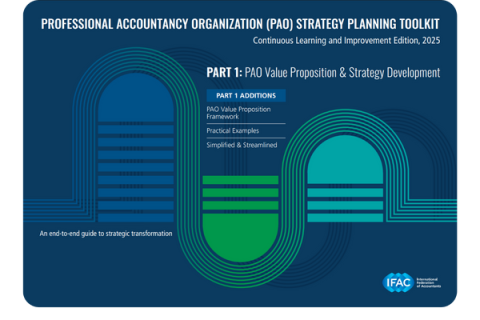
To support this goal, IFAC developed the PAO Strategy Planning Toolkit, Continuous Learning and Improvement Edition. It helps PAOs prioritize, deliver, and demonstrate value to members, regulators, government, and the wider stakeholder community. The Toolkit’s embedded Value Proposition Framework further supports PAOs in connecting strategic objectives to tangible outcomes.
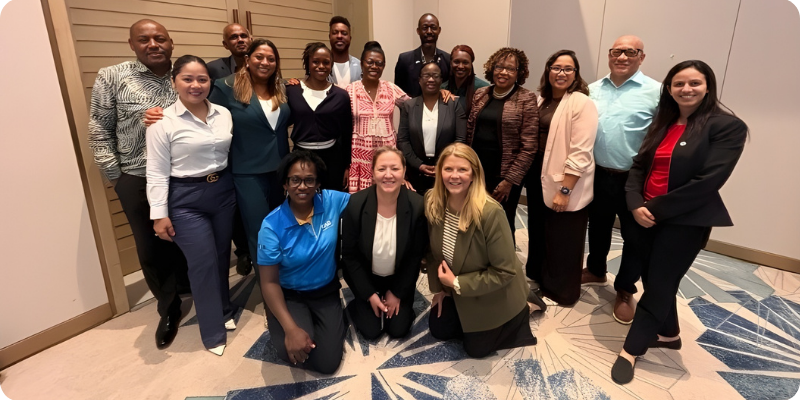
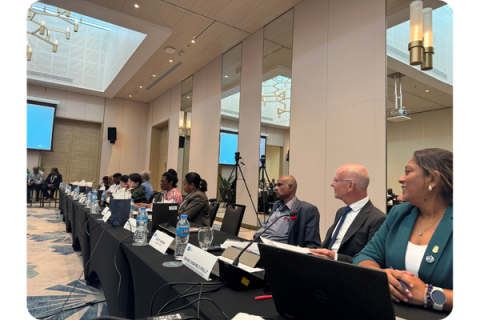
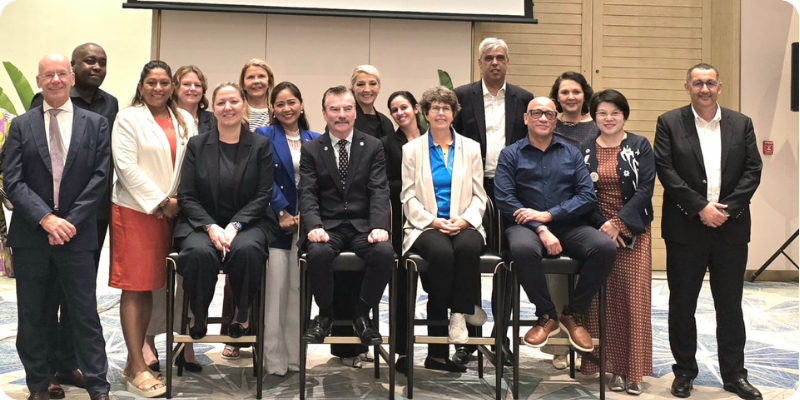
Building on this work, the IFAC PAO Development Advisory Group (PAODAG) partnered with the World Bank and the Institute of Chartered Accountants of the Caribbean (ICAC) to convene a regional peer-learning workshop on November 7, 2025, in Barbados, following an earlier workshop in Riyadh. The workshop brought together PAOs and development partners to explore how the Toolkit can be applied in practice to support stronger delivery and sustained outcomes, particularly in smaller jurisdictions.
During the workshop, participants exchanged insights on the development and successful implementation of PAO strategic plans. Caribbean PAOs, in particular, shared practical examples of how they strengthened partnerships with key stakeholders throughout the strategic planning process, demonstrating effective collaboration and engagement.
Drawing from these discussions, we share five lessons learned that are fundamental to the successful implementation of a PAO strategy.
1. Design and implement an effective stakeholder management plan
Participants emphasized that stakeholder engagement is a core capability that enables PAOs to build strong partnerships and deliver reforms that last. As highlighted in Part 1 of the Toolkit, PAOs benefit from a structured stakeholder management plan that clarifies who they engage, why it matters, and how insights from stakeholders inform priorities and delivery.
The importance of engaging beyond the membership was also reinforced at the Institute of Chartered Accountants of Barbados (ICAB) conference held on the same day. As Damien Skeete, President of the Institute of Chartered Accountants of Barbados (ICAB), noted, “We aren't simply bean counters. We are Bean Growers!” This message reflected a shared theme of the discussions: through strong partnerships with governments and development partners, PAOs can help deliver solutions that strengthen institutions and improve outcomes for the communities they serve.
2. Establish and maintain sufficient capacity for strategy delivery
Image
Workshop reflections emphasized that successful delivery depends on clearly defined roles, capable leadership, and continuity. Participants stressed the importance of an effective Council/ Board, a capable CEO, and a well-resourced Secretariat that can provide governance oversight, coordinate implementation, and sustain momentum. PAOs with emerging operational capacity may initially rely on volunteers serving on Councils and committees. As a PAO grows, strengthens its funding base, and expands its responsibilities, it can progressively professionalize by investing in dedicated leadership and staff.
Participants agreed that institutional readiness is not defined by size, but by continuity of delivery and the ability to follow through on commitments in collaboration with government and development partners.
3. Foster strong collaboration with the Government and development partners
Partnerships with government and development partners can significantly strengthen a PAO’s ability to expand capacity and support reforms. Collaboration with Governments could include serving in Government structures responsible for developing and implementing national development plans, dealing with a national crisis, and drafting legislation, among other actions.
Image
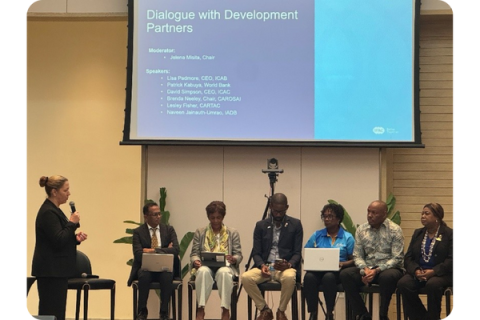
At the workshop, development partner representatives Lesley Fisher (CARTAC, International Monetary Fund), Brenda Neeley (CAROSAI Chair and Auditor General of The Bahamas), Naveen Jainauth-Umrao (Inter-American Development Bank), and Patrick Kabuya (World Bank) shared practical examples of collaboration with PAOs, including joint research to inform policy, targeted capacity-building, regional knowledge-sharing, strengthening the business environment, and audits of projects funded by development partners.
Participants emphasized the importance of IFAC and regional PAO bodies engaging development partners at both the global and regional levels to strengthen alignment and coordination. They also noted that IFAC’s dialogue with government officials during country visits can help open doors for PAOs and reinforce the profession’s contribution to the public interest.
4. Monitor and evaluate strategy implementation
Participants emphasized that sustained delivery requires disciplined tracking of progress and timely adjustments as priorities and conditions evolve. A clear results framework and regular reporting, as highlighted in Part 3 of the Toolkit, help PAOs maintain accountability and demonstrate measurable progress.
5. Communicate achievements to members and stakeholders
Participants noted that transparent communication of results is essential to sustaining trust and strengthening long-term partnerships. Strategic performance reporting, as outlined in Part 2 of the Toolkit, helps PAOs demonstrate value to members, regulators, government, and development partners.
“Real progress happens through collaboration,” said Jelena Misita, Chair of the IFAC PAO Development Advisory Group. “Strong partnerships between PAOs, governments, and development partners are built over time through shared priorities, mutual accountability, and long-term commitment. We should continue to invest in these relationships and strengthen the partnerships that make long-term reform successful.”
Patrick, who is based in Washington, DC, coordinates efforts to enhance public financial management, strengthen the accountancy profession, and oversee financial management responsibilities for World Bank–funded projects in Caribbean countries.
He is recognized as a leader in governance, with expertise spanning public financial management, corporate governance, digital technology, sustainability reporting, integrated reporting, and the development of the accountancy profession. Patrick has contributed to various projects across the globe aimed at advancing reforms in these areas.
Patrick is a Chartered Accountant (CA, South Africa), a Fellow Certified Public Accountant of Kenya (FCPAK), a Fellow of the Association of Certified Chartered Accountants (ACCA), and a Fellow of the African Leadership Initiative (a member of the Aspen Global Leadership Network). He has served in several leadership positions: Board member of the Institute of Directors of Southern Africa (IoDSA), Chairman of NEPAD Business Foundation Audit Committee, member of Cricket South Africa Audit Committee, Chairman of Institute of Certified Public Accountants of Kenya (ICPAK) South Africa Chapter, amongst others.
Before joining the World Bank Group in 2009, Patrick worked at EY in both Nairobi, Kenya and Johannesburg, South Africa, as well as at the South African Institute of Chartered Accountants (SAICA).
Jelena Misita has served as Chair of the IFAC PAO Development Advisory Group since January 2021. She is also a Board Member of the Union of Accountants, Auditors and Financial Workers of the Federation of Bosnia and Herzegovina (UAAFWFBH). In this capacity, and through her involvement in other global, regional, and national boards and organizations, she actively supports the advancement of the accountancy profession because of its vital role in building trust, fostering transparency, and creating opportunity in society.
With over 15 years of experience in developing Professional Accountancy Organizations (PAOs), Ms. Misita has led several initiatives to strengthen the profession in emerging economies where both strategic direction and practical support are essential for achieving high standards of professionalism and quality. She has contributed to numerous donor-funded reform programs and projects that aim to adopt best practices and serve the public interest.
Additionally, for more than two decades, Ms. Misita has served as the CEO at Revicon, a business advisory company focused on improving organizational performance and delivering strategic support to both public institutions and private enterprises.
Dana Jensen is the Head of Membership & Monitoring at the International Federation of Accountants (IFAC), where she leads IFAC’s global membership and monitoring function. In this role, she oversees member admissions, monitoring, and related governance processes, and contributes to the development of membership strategies that strengthen the value, credibility, and impact of IFAC membership worldwide.
Previously, Dana led IFAC’s engagement and monitoring work across the Middle East, North Africa, and the Caribbean. Trilingual in Arabic, French, and English, she brings a global perspective shaped by earlier work with the United Nations Department for Peacekeeping Operations. Dana holds an MSc from Columbia University.